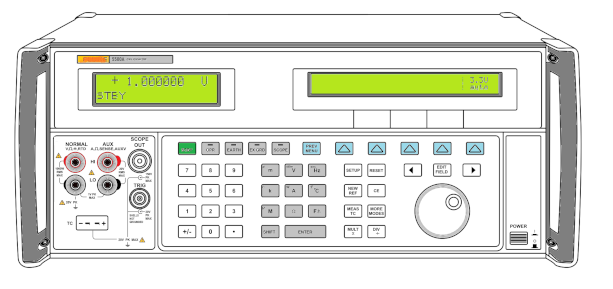
Automated Verification for the Fluke 5500A Multifunction Calibrator
Domini Technologies develops automation software to support performance verification procedures for the Fluke 5500A multifunction calibrator.
Verification procedures for multifunction calibrators can require a large number of measurement points, repeated instrument configuration changes, and careful evaluation of measurement results against specification limits. When performed manually, these procedures can require significant technician time and introduce opportunities for transcription or calculation errors.
Automation software allows calibration laboratories to execute structured verification workflows that control test equipment, collect measurement data, and evaluate results automatically.
Challenges of Manual Verification
Performance verification of multifunction calibrators such as the Fluke 5500A often involves:
- numerous measurement points across multiple functions
- coordination between calibrators and precision measurement instruments
- manual tolerance calculations
- repeated setup changes between measurements
- documentation of measurement results
Manual execution of these procedures can slow laboratory throughput and require constant attention from experienced technicians.
Automation helps ensure verification procedures are executed consistently while reducing technician workload.
Verification Automation Capabilities
The verification software provides structured workflows designed to automate measurement sequences while maintaining technician oversight of the testing process.
Typical capabilities include:
- automated test sequencing
- automated tolerance evaluation
- coordinated control of multiple instruments
- automated data collection and logging
- structured workflows for repeatable verification procedures
Automation allows technicians to focus on evaluating instrument performance rather than managing repetitive measurement steps.
Typical Verification Tests
Automation software may support a wide range of verification measurements for the Fluke 5500A, including:
- DC voltage output verification
- AC voltage output verification
- DC current output verification
- AC current output verification
- resistance output verification
- frequency output verification
These verification tests typically require coordination between the calibrator and precision measurement instruments such as digital multimeters or frequency counters.
Automation helps execute these procedures consistently while automatically evaluating measurement results against specification limits.
Designed for Calibration Laboratories
The automation software is intended for calibration laboratories and engineering test environments that perform verification of multifunction calibrators.
Typical environments include:
- calibration laboratories
- repair and service facilities
- aerospace and defense laboratories
- engineering validation environments
The software communicates with programmable test equipment through common interfaces such as:
- GPIB (IEEE-488)
- LAN / LXI
- USB
- serial interfaces
This allows automation to integrate with instruments already present in most calibration laboratories.
Relationship to Other Automation Projects
Domini Technologies also develops automation solutions for other multifunction calibrators and precision measurement instruments.
Related automation projects include:
These automation solutions help laboratories reduce technician workload while improving consistency of complex measurement procedures.
Discuss a Verification Automation Project
If your laboratory performs performance verification procedures for multifunction calibrators such as the Fluke 5500A, automation can significantly reduce technician workload while improving consistency of measurement workflows.
Domini Technologies works with calibration laboratories and engineering teams to develop automation solutions tailored to their equipment and procedures.